
SpaceX Tests to Failure: 7 Rapid Prototyping Lessons
When a Starship prototype explodes on live video, most people see a disaster. Some see a company burning cash. Both reactions miss what is actually going on.
SpaceX treats many of those explosions as data. That approach is called rapid prototyping, and it can save you real money in your own business too. In this post, you’ll learn what “testing to failure” means, why it works for SpaceX, where it does not work, and how to copy the smart parts on a much smaller budget.
Quick note before we start: I’m not a rocket engineer, and I’m not claiming inside knowledge of SpaceX. This is based on publicly reported information and my own read on what it means for regular people. Details about specific flights change fast, so check the sources at the end for the latest.
What “testing to failure” actually means
Testing to failure means you push a design until it breaks, then study why it broke. You don’t wait until everything looks perfect on paper.
Compare that with the older way of building big things. Build slowly, analyze everything on paper, and launch only when you feel very sure. That method is careful and can be great when a mistake costs lives or billions.
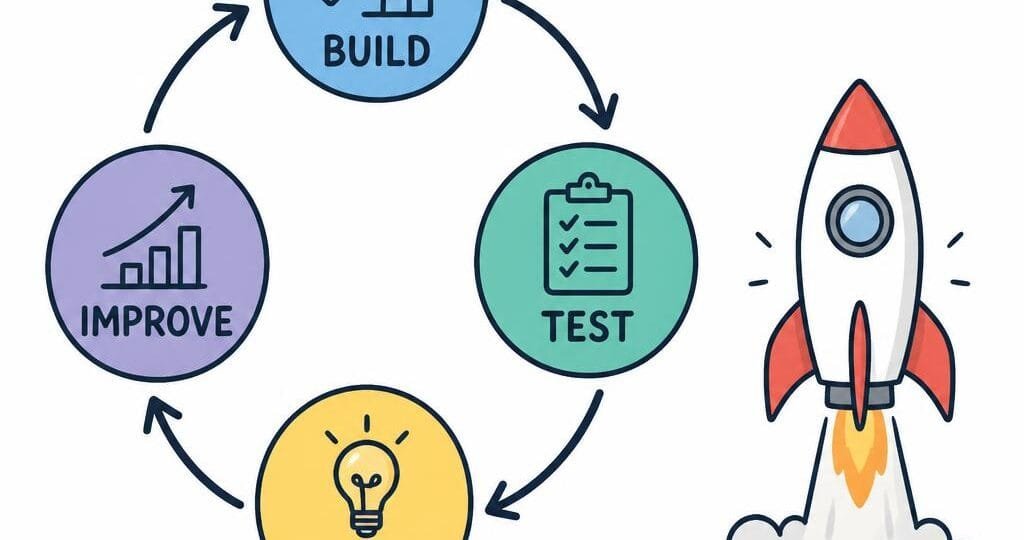
SpaceX leans the other way for a lot of its development. Build a version, fly it, watch what breaks, fix it, and build the next one. It is a loop, and the speed of the loop is the whole point.
The Starship example in plain English
Starship is SpaceX’s giant reusable rocket system. Over the years, the company has flown early prototypes, and several of them crashed or blew up during test flights, some during landing attempts. Later prototypes started landing successfully. In 2023, the first full Starship and Super Heavy launch test ended in an explosion, and the FAA opened a mishap investigation before allowing further flights.
Here’s the thing. A company that tests this way has to accept that failure will be visible, expensive, and sometimes embarrassing. But if each failure teaches the team something that would have taken months to learn on paper, the math can work out.
My take: the smartest part isn’t the explosions. It’s that the test is designed so the team learns something specific. A random crash teaches nothing. A crash you planned for, with sensors recording everything, teaches a lot.
Why this approach can save money
Think about two ways to build a new product.
Path A: Spend 18 months perfecting it, then release it and find out people don’t want it.
Path B: Spend 6 weeks on a rough version, show it to real people, and find out in month two that they don’t want it, or that they want something different.
Path B “fails” faster and costs far less. Nobody applauds a failed first version, but a cheap failure is one of the best deals in business.
SpaceX has publicly leaned on the idea of building lots of hardware and improving with each version instead of trying to make one perfect vehicle. The exact economics are not public, so treat any specific dollar claim you see online with caution.
7 lessons you can use in your own business
1. Test the scariest assumption first
Every idea rests on a few big assumptions. Find the one that would kill the whole plan if it’s wrong, and test that first.
Example: You want to sell a meal prep service to busy nurses. Before you buy equipment or build a website, find out if nurses will pay for it at all. Post in a local nurses group, run a small pre-order, or cook 10 meals by hand for paying customers. If nobody pays, you learned it for a few hundred dollars instead of a few thousand.
2. Build the cheapest version that can teach you something
A prototype doesn’t have to be pretty. It has to answer a question.
A landing page with a signup form can test demand. A spreadsheet can test whether your pricing works. A basic version of your service delivered by hand can test whether customers care. Honestly, most people over-build the first version because building feels safer than selling.
3. Decide what you’re trying to learn before you test
This is the lesson people skip. A test without a question is just spending money.
Before you try something, write one sentence: “I’m running this to find out whether ___.” Then decide what result would count as a yes and what would count as a no. Do that before you see the numbers, so you don’t talk yourself into a bad result later.
4. Make each round faster than the last
The value of iteration comes from speed. If each version takes six months, you get two learning cycles a year. If each takes two weeks, you get many more.
Ask yourself what slows your loop down. Is it waiting for approval, waiting for perfect design, or waiting to feel ready? Cut the biggest delay first.
5. Record everything, or the failure is wasted
A failed test only helps if you capture the reason. Keep a simple log: what you tried, what happened, what you think caused it, and what you’ll change.
A notes app or shared doc is fine. Without notes, you’ll repeat the same mistakes and just call it experience.
6. Separate cheap failures from expensive ones
This is where “fail fast” gets oversold. It works when failure is cheap and reversible. It’s a bad idea when failure is costly or permanent.
You can test a product page fast. You should not test your emergency fund, your health insurance, or your rent money the same way. My view is that the smartest people are not fearless. They’re careful about which risks they let themselves take quickly.
7. Don’t confuse learning from failure with celebrating it
Failure isn’t automatically useful. Some failures are just sloppy work.
SpaceX can afford rocket tests because it has large funding and a huge engineering team behind each attempt. A one-person business doesn’t have that cushion, so your version of “test to failure” should be small: a $50 ad test, a two-week pilot, or a trial with five customers.
When testing to failure is a bad idea
This approach is not for everything. Skip it when:
- People’s safety or health is on the line, such as medical, legal, or safety-critical work
- The failure can’t be undone, like giving up a stable job with no runway or taking on high-interest debt
- You have no way to measure the result, so you can’t learn from it
- You’re using “iteration” as an excuse to never finish anything
Space is also an unusual case. SpaceX runs uncrewed tests in controlled areas with regulators watching. The FAA reviews launch licenses and investigates mishaps, which is a good reminder that even bold testing works inside rules.
A simple table: careful planning vs. rapid prototyping
| Careful planning first | Rapid prototyping | |
|---|---|---|
| Best when | Mistakes are costly or dangerous | Mistakes are cheap and reversible |
| Speed | Slower | Faster |
| Cost of early failure | Low, because you avoid it | Small, but it happens often |
| Main risk | Building something nobody wants | Wasting effort on messy, unfocused tests |
| Good example | Medical devices, financial compliance | Product pages, pricing tests, new services |
Most real projects use both. Plan carefully for the risky parts and prototype quickly for everything else.
A quick way to start this week
- Pick one idea you’ve been putting off.
- Write down the single biggest assumption behind it.
- Design the cheapest test that could prove that assumption wrong.
- Set a deadline of one to two weeks.
- Write down the result, then decide: continue, change, or stop.
Stopping is a valid outcome. A test that saves you from a bad idea did its job.
Conclusion
SpaceX doesn’t test to failure because it likes explosions. It does it because fast, well-measured tests can teach more than long stretches of planning, at least when failure is affordable.
You don’t need a rocket budget to use the idea. Test the riskiest assumption first, build the cheapest version, write down what you learn, and keep the loop short. Just keep your safety net intact, because the goal is to fail small, not fail big.
Your next step: pick one idea and write the one sentence that starts “I’m running this to find out whether.”
This article is for general information and education. It is not financial, legal, or professional advice. Verify time-sensitive details about SpaceX and Starship with official sources.
FAQ Section
What does “test to failure” mean?
It means pushing a design or idea until it breaks, then studying the cause so the next version improves. It works best when the failure is cheap and safe.
Does SpaceX really blow up rockets on purpose?
Not always. Some tests are designed to push limits and some failures are unplanned. SpaceX has publicly described its development as iterative, where each flight informs the next. Check SpaceX and FAA updates for details on any specific flight.
Is rapid prototyping only for tech companies?
No. A restaurant testing a new menu item, a freelancer testing a new service package, or a shop testing a new product page are all using the same idea.
What is the difference between rapid prototyping and an MVP?
A prototype is an early version built to test a specific question. A minimum viable product (MVP) is a basic version you release to real customers. Many people use the terms loosely, and they overlap.
Is “fail fast” good advice for personal finance?
Mostly no. Your emergency fund, retirement savings, and debt payments are not places to experiment. Test ideas with small, affordable amounts, and talk to a licensed professional for big decisions.
How many tests should I run before deciding?
There’s no magic number. Set your success rule before the test, keep the test small, and decide only after you have enough real feedback to trust the result.